
Harbalism
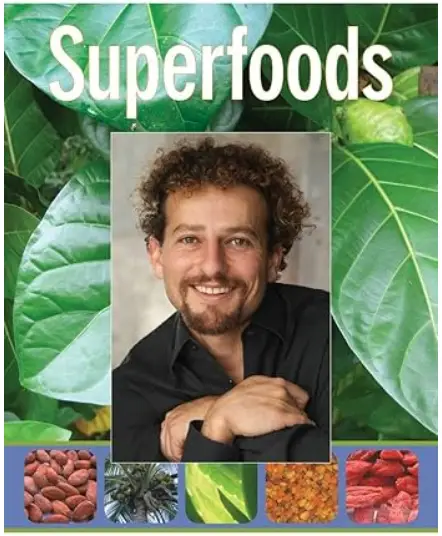
Let Nature Do The Work For You!
David Wolfe became a student of Chinese tonic herbalism and discovered the principles of jing, chi, and shen.
"Nature is simple in its complexity. Within one food we can find medicinal polysaccharides, essential fatty acids, vitamins, minerals, flavonoids, proteins, and amino acids—the steadfast building blocks for strong, supple, glowing skin, hair, nails, and teeth."
Superherbs
Chinese Tonic
There is no need for the human-made, synthetic chemical concoctions that are taking a devastating toll on our health and environment and that are the instigators of aging and poor health.
1. Pearl, Chinese Tonic Herbalism
"Pearl" refers to pearl powder (zhen zhu fen in Chinese), a time-honored tonic derived from finely ground freshwater or saltwater pearls. It is prized as both a beauty tonic and a Shen tonic, calming the mind, enhancing mental clarity, and promoting emotional peace while supporting skin health and overall vitality. In TCM, pearl enters the Heart and Liver meridians, where it anchors Shen (the spirit), reduces anxiety, improves sleep, and fosters a "peaceful attitude." Its mineral-rich composition—particularly bioavailable calcium concha (the same form used in bones and teeth)—nourishes collagen for smoother, more hydrated skin, earning it fame among historical figures like China's Dowager Empress, who credited it for her legendary youthful complexion.
2. Schizandra, Chinese Tonic Herbalism
Schisandra (Schisandra chinensis), known as Wu Wei Zi ("five-flavor fruit") in Traditional Chinese Medicine (TCM), is a revered adaptogenic tonic herb derived from the dried ripe berries of a climbing vine native to northern China and Russia. It embodies the five fundamental tastes of TCM—sweet, sour, salty, bitter, and pungent—which correspond to its ability to harmonize all five yin organs (liver, heart, spleen, lungs, and kidneys) and balance the Three Treasures: Jing (essence for longevity), Qi (vital energy), and Shen (spirit for mental clarity). As a "superior" herb in ancient texts like Shen Nong’s Materia Medica (dating back to the 1st century BC), it's prized for daily, lifelong use as an anti-aging tonic that promotes resilience, vitality, and overall harmony without the side effects of more targeted remedies. Its lignan-rich profile (e.g., schisandrin A and B) supports detoxification, stress adaptation, and cellular protection, making it a cornerstone of tonic herbalism for building radiant health and longevity.
3. Tulsi, Chinese Tonic Herbalism
Tulsi, commonly known as holy basil (Ocimum tenuiflorum or Ocimum sanctum), is an aromatic shrub native to the Indian subcontinent and Southeast Asia, belonging to the mint family (Lamiaceae). While it originates from Ayurvedic medicine—where it's revered as the "Queen of Herbs," "The Incomparable One," and an "elixir of life" for its spiritual and healing properties—tulsi has been integrated into broader Eastern herbal traditions, including Traditional Chinese Medicine (TCM). In TCM contexts, it's referred to as Sheng Lou Le (圣罗勒) and classified as a "Shen tonic," an herb that nourishes the spirit (Shen), calms the mind, and promotes emotional harmony, much like pearl or schisandra. This aligns with tonic herbalism's focus on the Three Treasures: supporting Jing (essence for vitality), Qi (vital energy for resilience), and especially Shen (mental clarity and spiritual balance). As an adaptogen, tulsi helps the body adapt to stress, harmonizing Yin-Yang and the Five Elements by entering the Heart and Liver meridians to dispel "internal wind" (agitation or restlessness). It's valued for preventive, long-term use to build radiant health, reduce inflammation, and foster longevity, with its eugenol-rich essential oils providing antimicrobial and neuroprotective effects. Though not a classical Chinese herb, its adoption in modern TCM blends emphasizes its role in addressing modern stressors like anxiety and immune challenges.
4. Shou Wu, Chinese Tonic Herbalism
Shou Wu, more commonly known as He Shou Wu (何首乌, Polygonum multiflorum), also called Fo-Ti in the West, is a perennial climbing vine native to central and southern China, Japan, Tibet, and Taiwan. In Traditional Chinese Medicine (TCM), it's renowned as one of the foremost "superior" tonic herbs, particularly a powerhouse Yin Jing tonic that replenishes the deep essence (Jing) of the Kidneys and Liver—the foundational organs for vitality, reproduction, and longevity. The name "He Shou Wu" translates to "Mr. He's black hair," stemming from a legendary tale of an elderly Mr. He who, after consuming the prepared root, restored his youth, virility, and jet-black hair. This herb embodies tonic herbalism's core philosophy of nourishing the Three Treasures—especially Jing for anti-aging and resilience—while harmonizing Yin-Yang balance and the Five Elements. Unlike raw forms used as laxatives, prepared He Shou Wu (steamed with black soybeans) is the tonic variety, enhancing bioavailability of its stilbenes, anthraquinones, and antioxidants like tetrahydroxystilbene glucoside for systemic rejuvenation. It's a staple in longevity formulas, supporting radiant health, fertility, and graceful aging without overstimulation.