
Neil deGrasse Tyson’s CBS Sunday Morning Interview Specifically Discussing His Views On God
Lorem ipsum dolor sit amet, consectetur adipiscing elit. Ut elit tellus, luctus nec ullamcorper mattis, pulvinar dapibus leo.
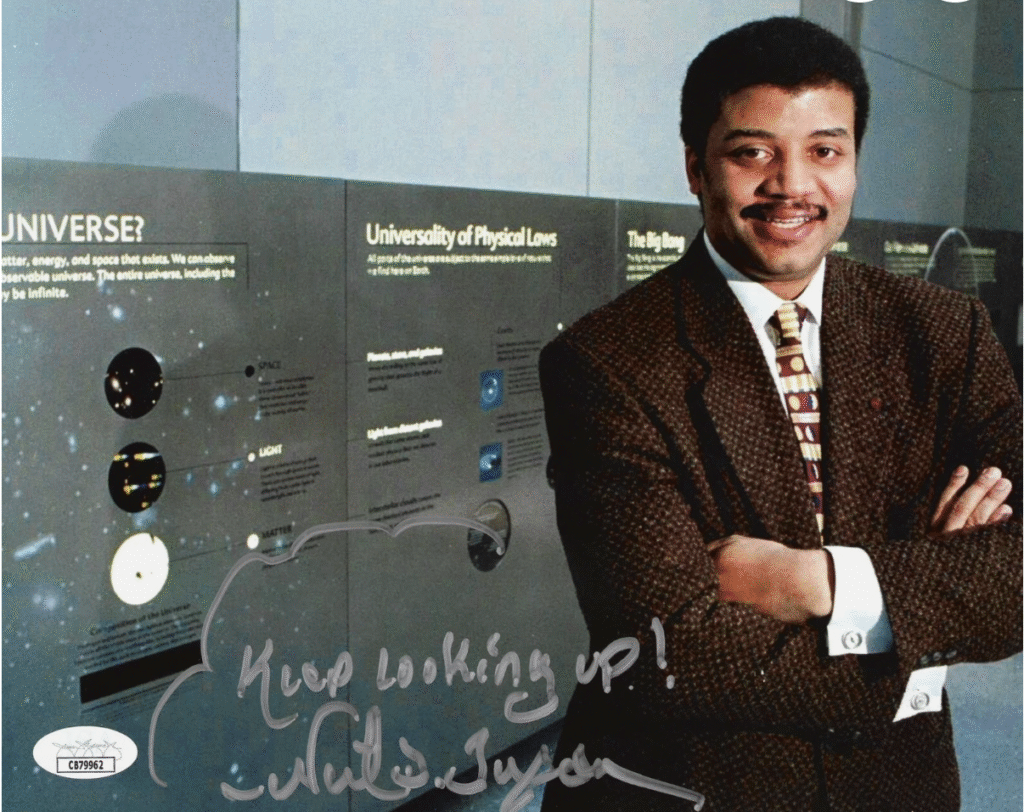
He Identifies As An Agnostic
xpressing skepticism about the existence of an all-powerful creator due to the universe’s harsh realities—like natural disasters, diseases, and suffering—which he sees as incompatible with a benevolent, omnipotent God. He argues that the more he studies the universe, the less inclined he is to believe in a higher power, emphasizing that religions are called “faiths” because they rely on belief without evidence, unlike science, which demands proof. Tyson has stated he has no issue with the concept of God but would only accept it with empirical evidence, noting that if God were discovered via technology, he’d be fine with it.
Key Points From The Interview & Related Discussions
Neil deGrasse Tyson on the ‘cosmic perspective
- Agnostic Stance: Tyson identifies as an agnostic, not an atheist. He explained to Teichner that he doesn’t claim there is no God but rather sees no evidence to support the existence of one. He distinguishes this from atheism, which he views as a definitive rejection of God’s existence. His agnosticism is rooted in a scientific demand for empirical evidence, a recurring theme in his public statements.
- Universe’s Harsh Realities: Tyson highlighted the universe’s indifference to human suffering, citing natural disasters (e.g., earthquakes, hurricanes), diseases, and cosmic events like asteroid impacts. He argues these phenomena challenge the idea of a benevolent, all-powerful God. For example, he rhetorically asked why a loving deity would allow such suffering, suggesting the universe operates without a purposeful intelligent design.
- Science vs. Faith: In the interview, Tyson emphasized the distinction between science and religion. He noted that religions are called “faiths” because they rely on belief without evidence, whereas science requires testable proof. He told Teichner that the more he learns about the universe through astrophysics, the less inclined he is to believe in a higher power, as the cosmos appears governed by natural laws, not divine intervention.
- Openness to Evidence: Tyson clarified he’s not opposed to the concept of God. If evidence for a deity were discovered—say, through advanced technology—he’d accept it. This aligns with his broader philosophy of following evidence wherever it leads, a principle he’s reiterated in other interviews and writings.
Critique of Educational Systems: Neil deGrasse Tyson’s 2010 NPR Interview
- While the interview focused on communication, Tyson touched on flaws in the educational system, a recurring theme in his work. He noted that traditional education often fails to teach students how to think critically, instead prioritizing rote memorization. This aligns with his later comments (e.g., 2014 Learning Guild, 2016 Huffington Post) about producing “automatons” rather than problem-solvers.
- He suggested that science education should be more experiential, using real-world examples to spark interest, much like his own journey from a curious kid at the Hayden Planetarium to an astrophysicist.